If you’re choosing between Cinque Terre and the Amalfi Coast for your next walking holiday, the short answer is this: Cinque Terre suits travellers who want a compact, largely car-free trail network linking five villages in a few days, while the Amalfi Coast suits those with a little longer to spend, who want to pair walking with more variety, from Positano’s cliffside streets to a day on Capri.
Both sit on opposite coasts of Italy and offer distinctly different walking experiences. This guide compares the trails, the scenery, the cost and the logistics of each, so you can choose the trip that’s right for you.
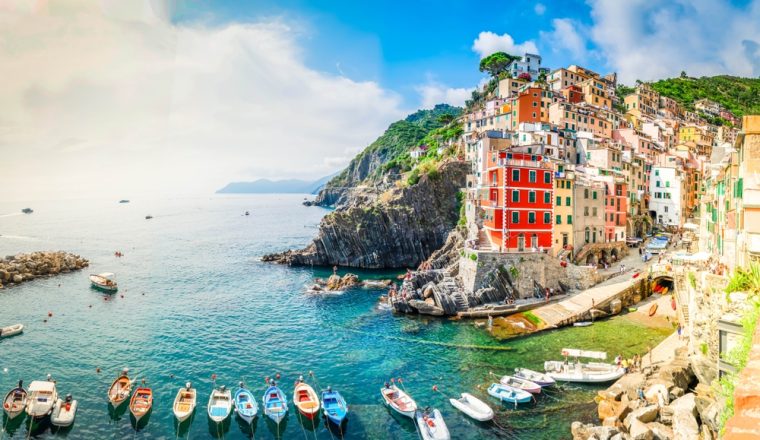
Table of Contents
Cinque Terre is the more compact, walking-focused choice, with five villages linked by a single coastal trail. The Amalfi Coast is a larger, more varied stretch of coastline, better suited to travellers who want to combine walking with wider sightseeing.
| Cinque Terre | Amalfi Coast | |
| Region | Liguria, La Spezia province | Campania, Sorrentine Peninsula |
| Villages/towns | 5 villages: Monterosso al Mare, Vernazza, Corniglia, Manarola, Riomaggiore | Coast road runs c. 50km from Sorrento to Amalfi via Positano |
| Main walking trail | Sentiero Azzurro (Blue Trail), c. 12km | Sentiero degli Dei (Path of the Gods), c. 7km, Bomerano to Nocelle |
| Getting around | Mostly on foot and by local train | Coastal road, by bus, ferry or private transfer |
| World Walks trip length | 4–7 nights | 7–8 nights |
| Difficulty grading | Moderate to Strenuous | Moderate |
Cinque Terre and the Amalfi Coast sit on opposite sides of Italy, worth knowing before comparing them further.
Cinque Terre lies in the La Spezia province of Liguria, on Italy’s northwest coast. It’s made up of five villages built into the cliffs above the sea: Monterosso al Mare, Vernazza, Corniglia, Manarola and Riomaggiore. La Spezia is the usual gateway, with regular trains running the short distance up the coast into the villages themselves.
The Amalfi Coast runs along the southern side of the Sorrentine Peninsula in Campania: a string of seaside towns strung across roughly 50km of coast road between Sorrento and Amalfi via Positano. It’s a longer, more spread-out region than Cinque Terre, and closer to Naples than to any city in the north.
Cinque Terre’s walking trails are the more structured of the two: a single waymarked coastal path links all five villages, so you always know where you are. The Amalfi Coast’s trails are just as rewarding but more spread out, and worth planning around.
The main route through Cinque Terre is the Sentiero Azzurro, or Blue Trail: around 12km of coastal path connecting Riomaggiore, Manarola, Corniglia, Vernazza and Monterosso al Mare. Some sections close after heavy rain or landslides, which happen periodically on this stretch of coast, so route notes and up-to-date local knowledge matter here. Beyond the Blue Trail, a wider network of paths climbs through the terraced vineyards above each village, offering quieter alternatives away from the coast.
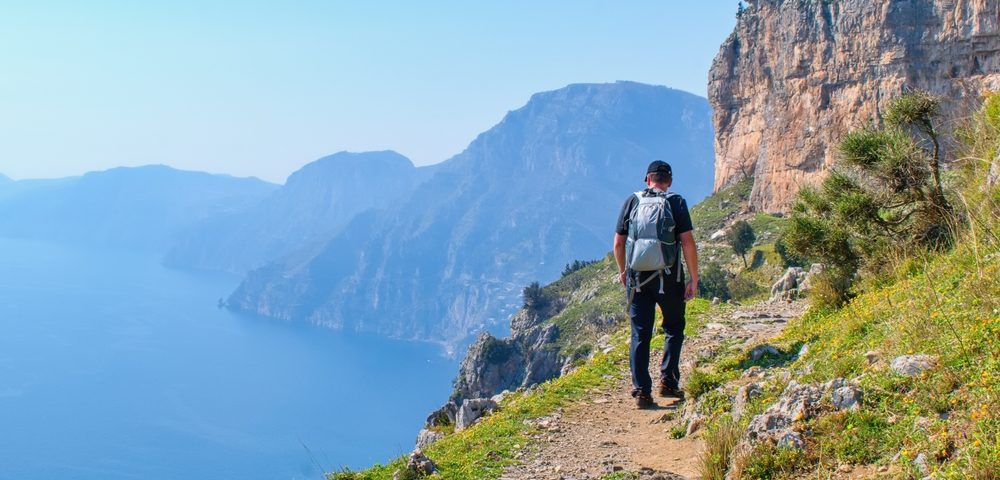
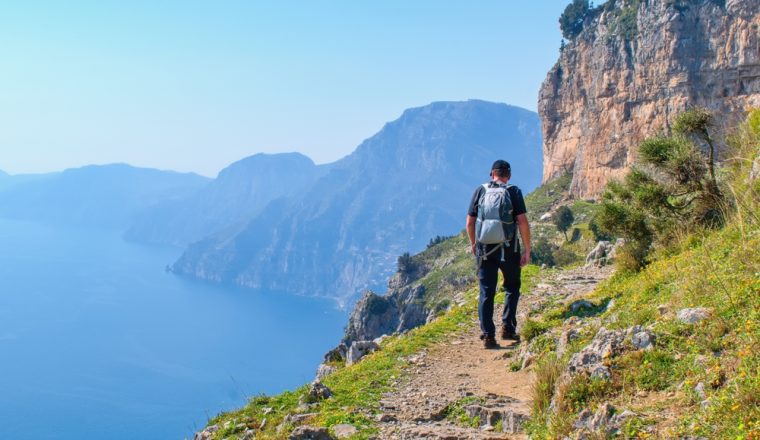
The Amalfi Coast’s best-known trail is the Sentiero degli Dei, the Path of the Gods: a roughly 7km route from Bomerano down to Nocelle, above Positano, graded moderate, with wide views over the coast for most of its length. Away from this one standout trail, walking on the Amalfi Coast means shorter paths linking individual towns rather than one continuous route, so a self-guided itinerary here is built from several connected walks.
World Walks grades every itinerary from Easy through Strenuous, and both coasts sit at the more approachable end of that scale. Our Cinque Terre – The Classic Walk is graded Moderate to Strenuous, reflecting some steeper sections between villages, while our longer Best of the Cinque Terre trip and both Amalfi Coast itineraries are graded Moderate. Neither destination calls for technical hiking experience, but good footwear and a reasonable level of fitness make both easier to enjoy.
The two coasts feel different to walk through, not just look different.
Cinque Terre feels unpolished in the best sense: terraced vineyards climbing the hillsides, washing lines strung between pastel houses, and small fishing harbours still working as ports. It’s a coastline shaped by generations of the same families, and that shows in the everyday detail of the villages.
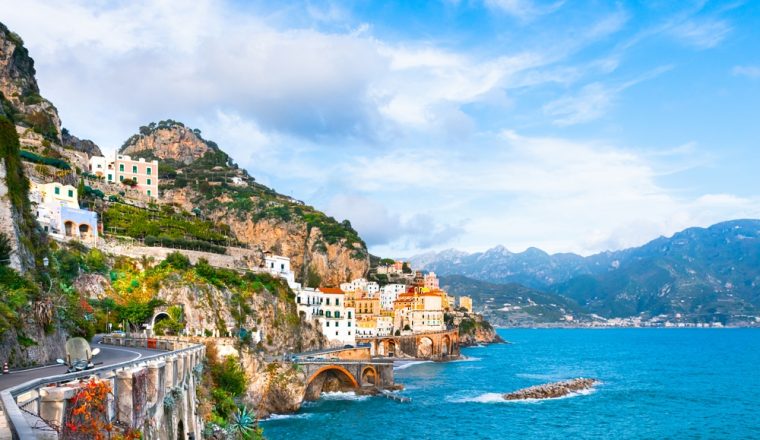
Walking the Amalfi Coast feels grander and more curated: cliffside lemon groves, whitewashed churches with tiled domes, and coastal towns like Positano that have built a reputation on their views as much as their history. Amalfi Coast beaches are mostly small coves reached by steps down from the cliffs, rather than long stretches of sand.
Cinque Terre is easier to get around: a local train links all five villages in minutes, and vehicles are largely kept out of the village centres. The Amalfi Coast relies on its coastal road, buses and ferries: more scenic, but slower and busier in peak season.
A single branch line connects all five Cinque Terre villages, with trains running every 15 to 30 minutes for most of the day. Vehicle access into the villages is heavily restricted, so once you arrive, everything is on foot or by train: on a walking tour, your luggage can move on ahead of you while you walk between villages.
The Amalfi Coast’s single coastal road, the SS163, winds along cliffs between Sorrento and Amalfi and can get busy with traffic in summer. Local buses and seasonal ferries link the main towns, and private drivers are a popular option for transfers between accommodation, logistics we take care of in advance on a self-guided trip, so you’re not working out bus timetables on the day.
Cinque Terre is the cheaper destination to visit day to day. The Amalfi Coast asks for a bigger budget across accommodation, food, and getting around, driven largely by its long-standing pull as a luxury travel destination.
The best months for walking along either coast are spring (April to June) and early autumn (September to October), when temperatures suit walking and the summer crowds have thinned. July and August bring the heat and the busiest crowds to both regions, making the trails less enjoyable and accommodation harder to book.
Cinque Terre’s trails can close temporarily after heavy rain, so shoulder-season walking here rewards a little flexibility in your itinerary. The Amalfi Coast holds its warmth a little longer into autumn, making October a strong month for an Amalfi Coast itinerary before the coast road quietens for winter.
For a fuller month-by-month breakdown, our guide to the best time to visit Italy for walking covers both regions alongside the rest of the country.
Cinque Terre suits a first self-guided walking holiday particularly well: its compact size and simple train connections mean there’s always a straightforward way back to your accommodation if a day doesn’t go to plan. The Amalfi Coast works just as well for a first self-guided trip, though its longer, more varied itinerary rewards a little more comfort with independent travel.
While guided group tours are available across both coastlines for those who prefer an accompanying leader, our itineraries are crafted specifically to support independent, self-guided exploration.
Whichever coast you choose, the reassurance is built in.
World Walks has planned self-guided walking holidays since 1998, working with small local operators who know these coastlines well, and every trip comes with detailed route notes, pre-booked accommodation, luggage transfers between stops, and a personal account manager throughout.
If you’d like to understand how self-guided travel actually works day to day, our master guide to self-guided walking holidays in Italy and our guide for solo self-guided walkers both cover the logistics in full, and our piece comparing guided and self-guided walking holidays is worth a look if you’re still deciding which style of trip suits you.
Cinque Terre and the Amalfi Coast can be combined into a single trip, but they sit at opposite ends of the country, connected by train via a change in Florence or Rome, so it’s worth building in a full travel day rather than assuming you can see both in one week.
Most self-guided walkers choose one coast and pair it with a neighbouring region instead: Cinque Terre combines naturally with Tuscany, while the Amalfi Coast sits within reach of Rome.
If you’d rather explore further afield, our full range of Italy walking holidays covers everywhere from the Dolomites to Sicily.
In short: choose Cinque Terre if you want a compact, walking-led trip with simple logistics and a rustic, lived-in feel. If you have additional time and prefer combining your walks with a more polished, diverse coastline, the Amalfi Coast is an ideal pick. Neither is the better destination outright: they’re different trips for different travellers, and the right choice comes down to how much time you have and what kind of coastline you want to wake up to.
Ready to walk one of them at your own pace? Browse our self-guided Cinque Terre walking holiday and our Amalfi Coast and Sorrento Peninsula trip, or get in touch with our team if you’re still deciding which one’s right for you.
No, they’re two separate regions on opposite coasts of Italy: Cinque Terre in Liguria, the Amalfi Coast in Campania. They get mentioned together because both are dramatic, walkable stretches of Italian coastline, but there’s no geographical overlap between them.
The Amalfi Coast is the slightly easier of the two on paper: our Amalfi Coast itineraries are graded Moderate throughout, against Moderate to Strenuous on our Cinque Terre Classic Walk, reflecting a few steeper sections between the Cinque Terre villages that the Path of the Gods doesn’t share to the same degree. Neither calls for prior hiking experience, and both sit comfortably within reach of a reasonably fit walker.
Yes. Beginners manage the Path of the Gods comfortably each year, as long as they’re prepared for some narrow, rocky sections underfoot and take it at an easy pace. If you’re new to self-guided walking, our shorter Amalfi Coast and Hills itinerary makes a gentler starting point than the longer Sorrento Peninsula route.
It’s possible, but the three regions sit at opposite corners of the country, connected by train journeys of several hours each, so fitting all three into one trip means more time travelling and less time walking.
A more realistic pairing is one coast with a single neighbouring region: ourLake Como walking holiday works well alongside Cinque Terre if you’d rather add a second walking destination than attempt all three regions at once.
Sign up to receive the latest information on World Walks