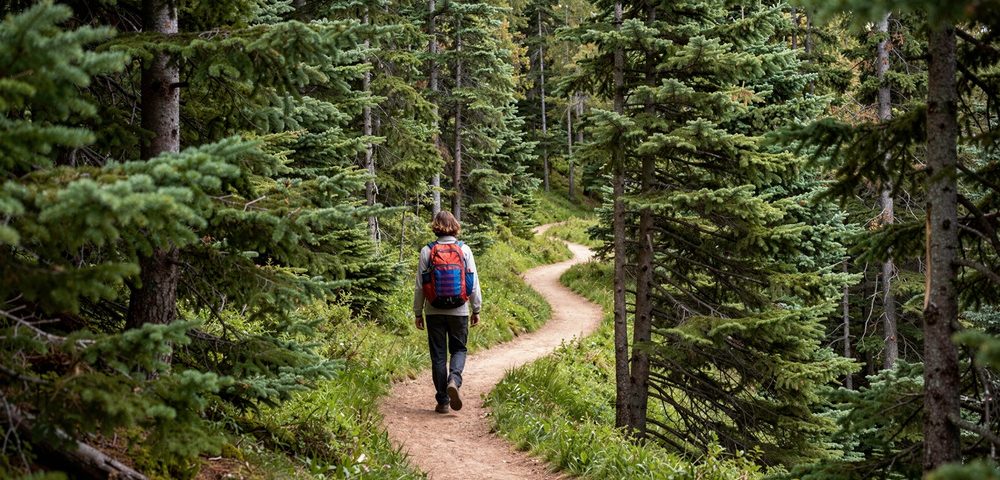
Venturing out on a solo trek doesn’t mean you have to handle every detail by yourself. Solo walking holidays that are self-guided put you on a carefully planned route with nobody keeping pace beside you, but nearly everything that could go wrong on a solo trip has already been thought through on your behalf.
Anyone weighing up a first solo walking holiday asks some version of the same three questions: is it safe, how do the day-to-day logistics actually work, and will it feel confident rather than nerve-racking?
This guide answers all three directly, using the structure World Walks builds into every self-guided walking holiday: route notes, luggage transfers, a graded difficulty system, and a personal account manager you can reach throughout your trip. It’s part of the full range of walking holidays World Walks offers, alongside guided and tailor-made formats.
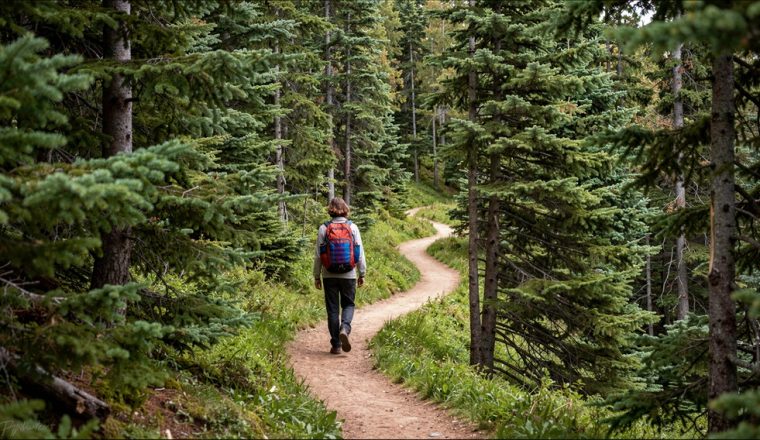
A self-guided walking holiday means following a pre-planned route at your own pace, with no guide beside you, while route notes, maps, accommodation and luggage transfers are arranged in advance. For a solo traveller, that combination removes the two biggest obstacles to walking alone: not knowing where you’re going, and having to organise every stop yourself.
A guided walking holiday puts you in a small group led by someone who knows the route, sets the pace and handles problems as they come up. That suits solo travellers who want company built in from day one, which is exactly what most walking holidays for singles on the wider market are built around.
A self-guided holiday works differently: you still get local knowledge and a planned route, but you walk it on your own schedule, deciding the pace, the stops and the rest days yourself while the planning and safety net stay in place behind the scenes.
We’ve written a fuller comparison in guided vs self-guided walking holidays if you’re still deciding between the two formats.
Solo self-guided walking holidays suit a wide range of travellers, from confident hikers to complete beginners, because of what they remove and what they keep:
Walking alone is not inherently dangerous on the well-marked, well-supported routes, but it does call for the right preparation, different to a guided group trip. Most hiking alone safety concerns come down to being unprepared, not to the walking itself: a wrong turn, a change in weather, or a long day with no one to check in with.
World Walks was founded by tour guides and travel writers back in 1998, and that heritage shapes how routes are chosen and checked each year.
| Concern | Reality |
| Getting lost | Detailed route notes and maps, checked each season by the local operator. |
| Getting injured with no one nearby | Your account manager and local operator know your schedule, with emergency contacts provided before you travel. |
| Feeling unsafe in an unfamiliar place | Routes are chosen with local operators who know which paths and villages suit solo travellers. |
| Facing a harder day than expected | The grading system is designed to prevent this before you book. |
| Not knowing what happens if plans change | Accommodation and transfers are pre-booked, so a delayed day doesn’t put the rest of the trip at risk. |
These are the tips for hiking alone that actually make a difference on a self-guided route:
If you want the fuller list of what’s covered before, during and after a solo trip, our full FAQs go through it in more detail.
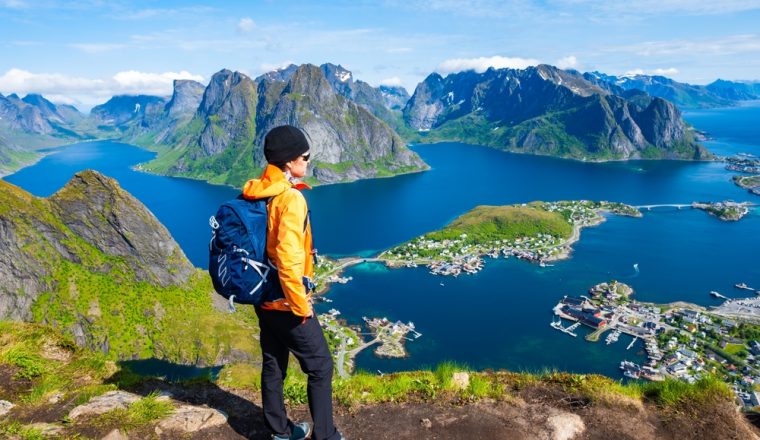
World Walks makes solo self-guided walking straightforward by handling everything you’d otherwise have to arrange yourself: navigation, accommodation, luggage and a point of contact throughout your trip. Here’s what that means in practice.
World Walks’ solo walking holidays, UK-wide and across Europe, come with detailed route notes and maps prepared specifically for that trip, covering daily distances, key turnings, places to stop and what to expect underfoot. It’s the same information a guided group would follow, just handed to you directly instead of read aloud by a leader, so you walk it at whatever pace suits you.
Luggage transfers move your bags between hotels each day, so you’re not carrying more than a light daypack while you walk, one of the more practical reassurances a self-guided trip offers a solo traveller. Accommodation is pre-booked and carefully selected for each stop, so you’re not searching for somewhere to stay at the end of a long walking day.
Every World Walks holiday comes with a personal account manager: one named point of contact who helps plan your trip and stays reachable while you’re travelling. For a solo walker, that’s a different kind of reassurance than a general customer service line.
Ready to see what’s available? Browse the full range of self-guided walking holidays to check current destinations and departure dates, or read on for how to pick a grade that matches your fitness.
Most first-time solo walkers should start with an Easy or Moderate grade: routes with shorter daily distances and limited climbing, so the walking itself builds confidence rather than testing it. World Walks grades every holiday from Easy to Strenuous, based on daily distance and terrain, and the same logic applies whether you’re looking at walking holidays for singles over 50 or planning a first solo trip at any age.
| Grade | Typical Daily Distance | Terrain |
| Easy | Up to 16km (10 miles) | Low-level walking through fields and woodland, with few ascents or descents |
| Easy to Moderate | Up to 22km (13 miles) | Easy walking through woodland and fields, with some uneven tracks and gentle ascents |
| Moderate | Up to 26km (16 miles) | A mix of woodland, fields and rocky or uneven paths, with sustained climbs of up to around 500m |
| Moderate to Strenuous | Up to 31km (19 miles) | Rocky or uneven terrain with plenty of ascents and descents |
| Strenuous | Up to 37km (23 miles) | Long days on rough terrain, sometimes in high mountains, with sustained climbs of 1000m or more |
The full grading guide covers each tier in more depth, or your account manager can talk it through against your own hiking experience.
Selecting an overly challenging grade by overestimating personal fitness is the single most frequent reason a beginner’s initial walking holiday in the UK ends up feeling more demanding than anticipated.
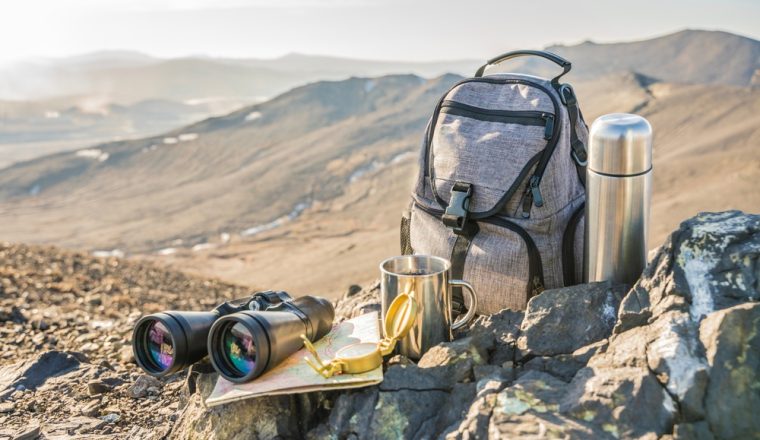
Knowing what to bring when hiking alone matters more here than on a group trip, since there’s no one else’s bag to borrow from. Luggage transfers mean you’re not carrying your main bag while you walk, but your daypack is yours alone to manage.
The best solo walking holidays for a first trip share three things: well-marked trails, gentle terrain, and villages close enough together that a shorter day is always an option, pointing most first-timers toward Easy or Moderate-graded routes in the UK or established regions of Western Europe. Many round-ups of the best self-guided walking holidays skip this filter entirely, focusing on scenery alone rather than which routes actually suit a first solo trip.
World Walks covers destinations across 35+ countries, and a good first solo trip does not need to start abroad.
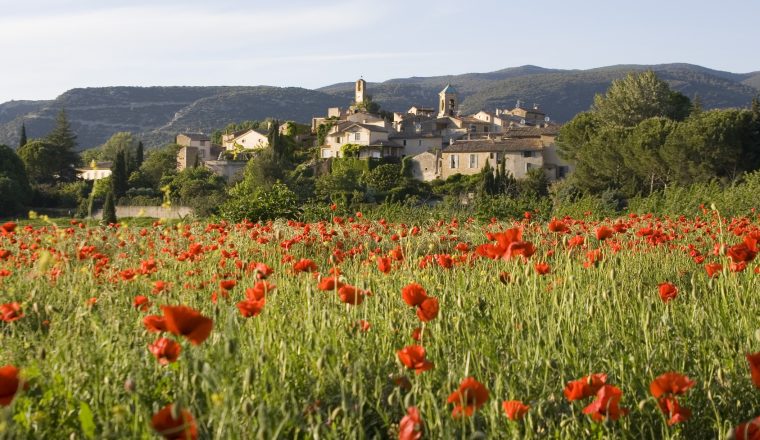
For solo walking holidays Europe-wide, Provence is a good example of a region built for confidence-building: village-to-village walking through vineyards and olive groves, with plenty of shorter routes to choose from.
Our guide to walking the Luberon and Verdon Gorge covers the region’s easier valley paths in more detail.
Tuscany offers a similar starting point, with rolling countryside and hilltop villages rather than the more demanding routes further south. The guide to self-guided walking holidays in Italy breaks down which regions suit a first-time solo walker.
For a route with a clear sense of purpose, pilgrim routes, including sections of the Camino de Santiago, come with a built-in community of fellow walkers even on a self-guided trip.
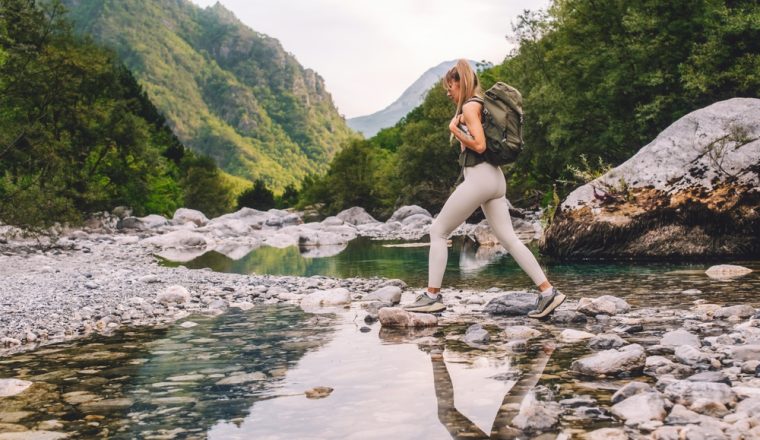
For solo walking holidays for women, the safety net looks the same as it does for any solo traveller on one of our routes: vetted local operators, detailed route notes and a reachable account manager, plus a handful of practical safety habits worth building in.
We select routes through the local operators we work with, who know which paths and villages suit solo travellers, rather than whichever route is shortest to plan. That local vetting, not general advice about trusting your instincts, is what actually reduces risk on an unfamiliar trail.
Whether you’re weighing up singles walking holidays UK-wide or a first trip into Europe, speak to a World Walks account manager and we’ll help match a route to your confidence and pace.
For something built entirely around your own interests, up to a fully bespoke, luxury self-guided walking holiday across Europe, a tailor-made itinerary is also worth considering.
Hiking alone is not inherently dangerous on well-marked, well-supported routes, though it removes the built-in backup of a group. The real risk comes from being unprepared: clear route notes, a known daily distance and a way to reach help address most of what makes solo walking feel risky.
Yes, with the same preparation any solo walker needs, plus a few extra habits such as sharing your daily route with someone at home and choosing accommodation in villages rather than isolated stops. We build this into route selection through local operators who know each destination’s trail conditions.
Easy or Moderate-graded UK routes, chosen for shorter daily distances and gentler terrain, suit most solo walkers in their 50s and 60s wanting a first or low-pressure trip, which is exactly what people usually mean by singles walking holidays over 50s. Our UK destinations cover England, Wales and Scotland, each with a range of grades to choose from.
No. Route notes are provided in English, and the local operators we work with are used to supporting English-speaking travellers. A handful of basic phrases is a nice touch for village stops, but not a requirement for walking the route safely.
There isn’t a single verified figure for this across the industry, so treat any exact number with caution. Our solo travellers span a wide range, though the wider self-guided audience skews toward people in their 50s to 70s who want an active, unhurried pace rather than younger backpacker-style solo travel.
Sign up to receive the latest information on World Walks