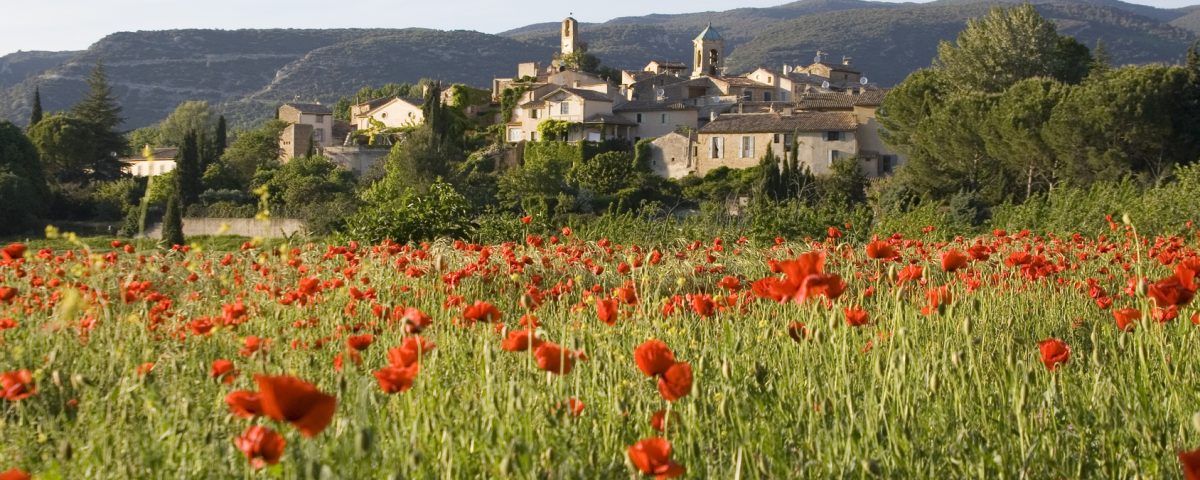
Provence is walked village to village, through vineyards and olive groves, from one hilltop settlement to the next. Add a few days in the Verdon Gorge, where the trail runs along the canyon rim above the river, and you cover two distinct landscapes in one trip: cultivated countryside in the Luberon, and canyon walking in the Verdon. Whether you’re searching for walking holidays in the south of France generally or have already settled on Provence and the Verdon specifically, this guide covers the landscape you’ll be walking through, when to go, our favourite villages and viewpoints, how a self-guided trip actually works, and the practical details worth knowing before you book.
Trails here run through vineyards, olive groves and countryside most visitors only see from a coach window, which is why this remains one of the most popular walking holidays in the south of France, and why hiking in Provence ranks among the top things to do in Provence for anyone who’s spent a day or two here.
Many walkers combine both: a few days through the Luberon, then sturdier boots for the Verdon’s clifftop paths. That contrast, soft valley walking paired with steeper canyon trail, is what keeps Provence and the Verdon Gorge among the best walking holidays in the south of France.
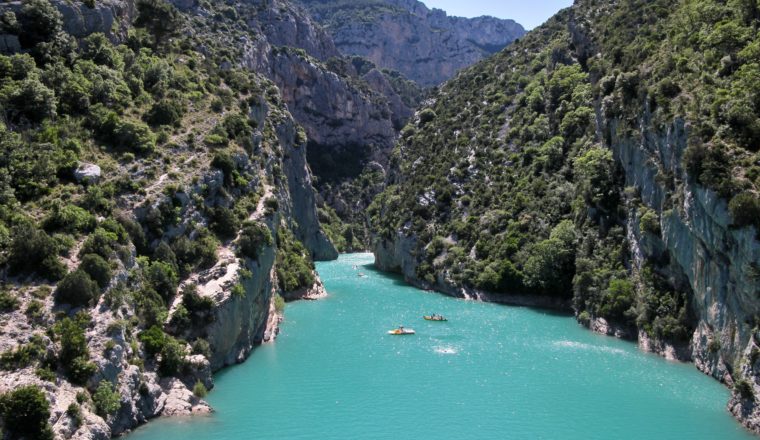
The Verdon Gorge is different again: a limestone canyon carved by the Verdon River, with cliffs rising up to 700 metres above turquoise water. According to the Haute-Provence UNESCO Global Geopark, the wider area is one of the largest geological open-air museums in France, with 18 protected geological sites and rock formations more than 300 million years old. Combine a few days here with time in the Luberon and you get a walking holiday in the south of France that moves between cultivated countryside and canyon scenery in one trip.
Here’s a closer look at both areas: the Luberon’s vineyards and hilltop villages to the west, and the Verdon Gorge’s canyon trails to the east.
Much of a Provence walking holiday is spent in and around the Luberon, a limestone massif protected as a Regional Natural Park. According to the Provence-Alpes-Côte d’Azur Tourism Board, the park covers 165,000 hectares between the Vaucluse and Alpes-de-Haute-Provence departments, stretching some 75 kilometres and rising to 1,125 metres at its highest point, the Mourre Nègre. It’s also a UNESCO Biosphere Reserve, with golden eagles and Bonelli’s eagles nesting in its limestone cliffs.
On foot, the Luberon route passes dry-stone shepherds’ huts, lavender fields turning purple through June, and hilltop villages built from pale local stone. Apt (known for its ochre quarries) and Forcalquier (with its old citadel) are two of the main stops, and it’s what most people picture as provence hilltop villages. Two of our routes cover this ground: Provence – The Foothills of the Luberon and The Hilltop Villages of Northern Provence.
The Verdon Gorge lies further east, within the Verdon Regional Natural Park, which covers nearly 188,000 hectares and is crossed by the 165-kilometre Verdon River. The canyon itself runs for around 21 kilometres, with cliffs rising up to 700 metres.
Walking here is a different experience to the Luberon: proper trail, sturdy footwear, and views down into turquoise water rather than out across vineyards. The gorge is crossed by sections of the long-distance GR4, GR406 and GR49 routes, part of France’s official grande randonnée network maintained by the Fédération Française de la Randonnée Pédestre. This is technically walking in east Provence, closer to the Alps than the coast: expect more climbing than in the softer valleys further west.
Provence and the Verdon are walkable for much of the year, but conditions change a great deal by season. Local authorities can temporarily close parts of the Verdon Gorge during periods of high fire risk, typically between mid-June and mid-September, so it’s worth checking current trail and access conditions closer to your travel dates.
| Season | What to Expect | Good For |
| Spring (April–May) | Mild days, wildflowers, fewer crowds | Comfortable walking temperatures, green Luberon countryside |
| Summer (June–August) | Lavender in bloom through June, then hot and often 30°C+ through July and August, with gorge access sometimes restricted | Lavender season and photography in June; swimming and boating in the gorge during peak heat, though less ideal for long walks |
| Autumn (September–October) | Warm days, cooler evenings, harvest season | Many regulars’ pick for walking, wine harvest, quieter villages |
| Winter (November–March) | Cool and often below 10°C, shorter daylight hours, lavender fields dormant | Quiet trails and villages, though some higher Verdon sections may see reduced access in poor weather |
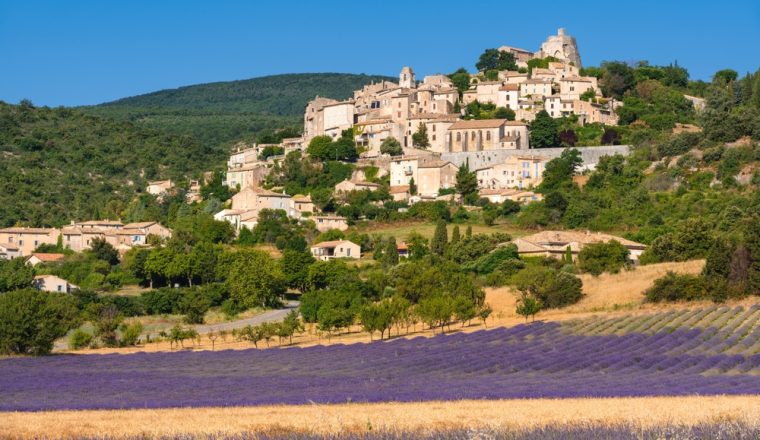
If you’re weighing up the best villages to visit in Provence and the Verdon together, these are the ones that come up most often in our own route planning:
A self-guided walking holiday in Provence isn’t a guided tour, nor a solo expedition. Your route notes, luggage transfers and accommodation are arranged before you set off, but nobody’s walking beside you. That’s the format behind most self-guided walking holidays in the south of France: real independence, with the groundwork already done. In practice, it means:
The route notes, accommodation and local knowledge behind it all come from partners we’ve worked with for years; see who we work with to find out more about them.
A few things worth knowing before you book:
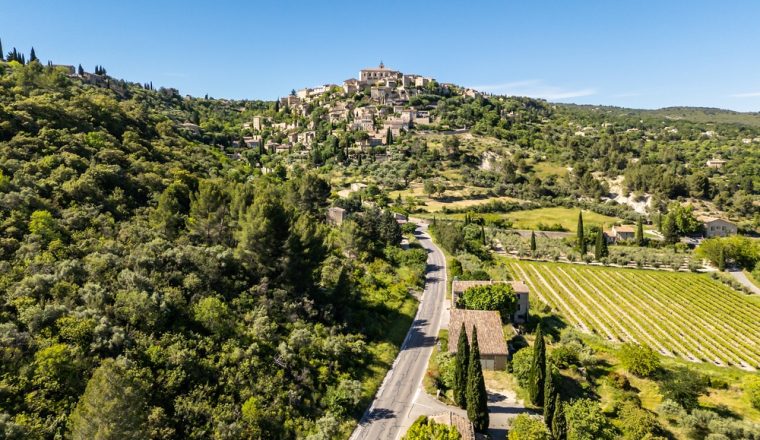
If this has you thinking about your own trip, take a look at our self-guided walking holiday through the Foothills of the Luberon, one of our most popular self-guided walking holiday Provence packages, or browse our wider range of walking holidays in France.
Thinking about a gorges du verdon walking holiday specifically, rather than the Luberon? Not sure which route suits you? Our team is happy to talk through the options: get in touch and we’ll help you plan it.
A few of the questions we’re asked most often. For anything not covered here, our full FAQs page has more detail on how a World Walks holiday works.
If you want the lavender at its best, aim for the last two weeks of June, just before the fields are cut. From early July, Provence’s own summer holidaymakers join the tourist season, and the Bastille Day weekend (14 July) is one of the busiest of the year, so late September is often the better choice if you’d rather have the villages to yourselves.
World Walks grades every route from Easy through to Strenuous. Most people who’ve done a few day walks before are comfortable on our Luberon itineraries, which sit toward the gentler end of that scale; Verdon routes generally sit higher up it, with more sustained climbs. Check our grading guide for the full breakdown before you book.
There’s no direct rail line into the gorge, so most visitors arrive by car or transfer. As a rough rule, Nice is usually the quicker option if your route starts near Castellane at the eastern end, while Marseille tends to suit trips that begin in the Luberon and finish at Moustiers-Sainte-Marie in the west.
It depends on the season and the route. Valley-floor paths near the river tend to stay open year-round, while some of the higher clifftop routes, including sections of the Route des Crêtes, can close in poor winter weather. In summer, parts of the gorge can also close during periods of high fire risk, typically mid-June to mid-September.
If it’s your first self-guided trip, the Luberon is usually the easier introduction: quieter valley paths, plenty of villages to break up the day, and less reliance on a car between stops. The Verdon suits walkers who don’t mind a bit more climbing in exchange for clifftop views over the canyon.
Not necessarily. Among the best self-guided walking holidays in the south of France, ours are graded by difficulty, and most people who book them are couples or small groups of friends in their fifties and sixties walking for pleasure rather than pace. Gorge-based routes ask a little more: some sustained climbs and less shade, so they suit walkers with a bit more hill experience.
Sturdy, broken-in walking shoes, layers for cooler mornings, sun protection, and a refillable water bottle: the region gets a lot of sun even in spring and autumn. It’s also worth bringing some cash, since smaller village cafés and markets don’t always take card, and a lightweight day pack for the days your main luggage is being transferred ahead of you.
Sign up to receive the latest information on World Walks